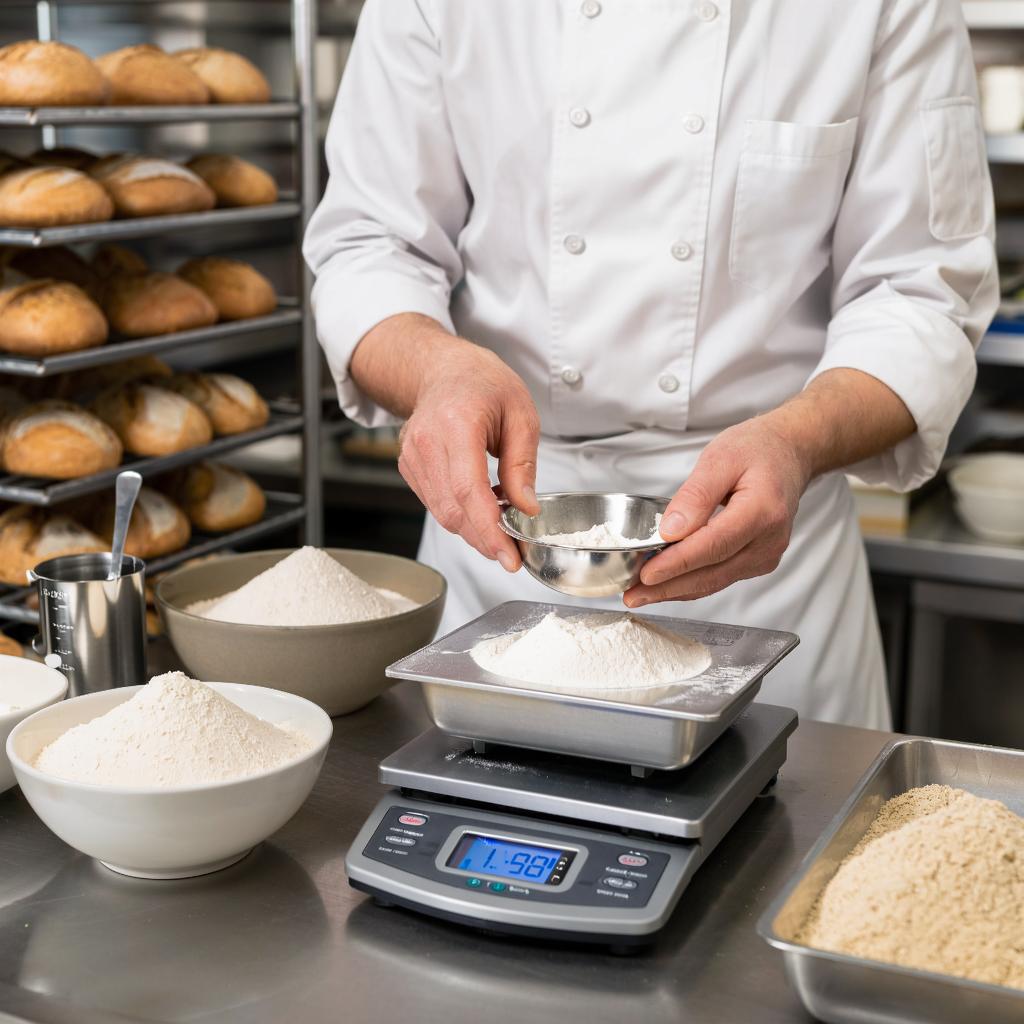
When it comes to baking bread, precision is key. Many home bakers struggle with inconsistent results, and the culprit is often inaccurate flour measurements. Today, we'll explore why professional bakers always weigh their ingredients and how you can achieve bakery-quality results at home.
The Problem with Volume Measurements
A "cup" of flour can weigh anywhere from 120g to 150g depending on how it's measured. This 25% variation can mean the difference between perfect bread and a dense brick. Let's look at why this happens:
- Settling and compaction: Flour settles over time, becoming more dense
- Scooping method: Directly scooping compresses flour, adding up to 30% more
- Humidity: Flour absorbs moisture from the air, changing its weight
- Sifting: Sifted flour takes up more volume but weighs the same
The Science Behind Flour Density
Flour is composed of tiny particles that can pack together differently based on handling. When you scoop directly from the bag, you're compressing these particles, resulting in a denser measurement.
"In professional bakeries, we never use cups. Weight is the only reliable measurement for consistent results." - Master Baker Jean-Pierre Dubois
Common Flour Weight Conversions
| Flour Type |
1 Cup (Sifted) |
1 Cup (Spooned) |
1 Cup (Scooped) |
| All-Purpose |
120g |
125g |
140-150g |
| Bread Flour |
125g |
130g |
145-155g |
| Whole Wheat |
113g |
120g |
135-145g |
| Cake Flour |
110g |
115g |
130-140g |
Best Practices for Measuring Flour
- Use a kitchen scale: Invest in a digital scale accurate to 1 gram
- Zero/tare function: Place your bowl on the scale and zero it before adding ingredients
- If using cups: Spoon flour into the measuring cup and level with a knife
- Never tap or shake: This compacts the flour and adds weight
- Store properly: Keep flour in airtight containers to prevent moisture absorption
Converting Your Favorite Recipes
Ready to convert your grandmother's recipe from cups to grams? Here's a simple process:
- Use the standard conversion: 1 cup all-purpose flour = 125g
- Make the recipe once with careful measurements
- Adjust based on results (add 5-10g if too wet, reduce if too dry)
- Write down your perfected weights for future use
Ready to Convert Your Recipe?
Use our precision converter tool to accurately convert any recipe from cups to grams!
Try Our Converter →
The Professional Baker's Secret
Professional bakers use what's called "baker's percentage" - expressing each ingredient as a percentage of the flour weight. This makes scaling recipes incredibly easy:
- Flour: 100% (always the base)
- Water: 60-75% (depending on bread type)
- Salt: 1.8-2.2%
- Yeast: 0.5-2%
Conclusion
Switching from volume to weight measurements might seem like a small change, but it's the single most important step you can take to improve your baking. Start with a simple recipe, use a scale, and watch your consistency improve dramatically. Your bread will thank you!
Когда дело доходит до выпечки хлеба, точность является ключевым фактором. Многие домашние пекари сталкиваются с непостоянными результатами, и виновником часто являются неточные измерения муки. Сегодня мы рассмотрим, почему профессиональные пекари всегда взвешивают ингредиенты и как вы можете достичь качества пекарни дома.
Проблема с объемными измерениями
"Стакан" муки может весить от 120 до 150 граммов в зависимости от способа измерения. Эта 25% вариация может означать разницу между идеальным хлебом и плотным кирпичом. Давайте посмотрим, почему это происходит:
- Оседание и уплотнение: Мука со временем оседает, становясь более плотной
- Метод зачерпывания: Прямое зачерпывание сжимает муку, добавляя до 30% больше
- Влажность: Мука поглощает влагу из воздуха, изменяя свой вес
- Просеивание: Просеянная мука занимает больше объема, но весит столько же
Наука о плотности муки
Мука состоит из крошечных частиц, которые могут упаковываться по-разному в зависимости от обращения. Когда вы зачерпываете прямо из пакета, вы сжимаете эти частицы, что приводит к более плотному измерению.
"В профессиональных пекарнях мы никогда не используем стаканы. Вес - единственное надежное измерение для стабильных результатов." - Мастер-пекарь Жан-Пьер Дюбуа
Таблица конвертации веса муки
| Тип муки |
1 стакан (просеянная) |
1 стакан (ложкой) |
1 стакан (зачерпнутая) |
| Универсальная |
120г |
125г |
140-150г |
| Хлебная |
125г |
130г |
145-155г |
| Цельнозерновая |
113г |
120г |
135-145г |
| Для тортов |
110г |
115г |
130-140г |
Лучшие практики измерения муки
- Используйте кухонные весы: Инвестируйте в цифровые весы с точностью до 1 грамма
- Функция обнуления: Поставьте миску на весы и обнулите перед добавлением ингредиентов
- Если используете стаканы: Насыпайте муку ложкой в мерный стакан и выравнивайте ножом
- Никогда не стучите и не трясите: Это уплотняет муку и добавляет вес
- Правильное хранение: Храните муку в герметичных контейнерах для предотвращения поглощения влаги
Конвертация ваших любимых рецептов
Готовы конвертировать бабушкин рецепт из стаканов в граммы? Вот простой процесс:
- Используйте стандартную конвертацию: 1 стакан универсальной муки = 125г
- Приготовьте рецепт один раз с тщательными измерениями
- Корректируйте на основе результатов (добавьте 5-10г если слишком влажно, уменьшите если слишком сухо)
- Запишите ваши идеальные веса для будущего использования
Готовы конвертировать ваш рецепт?
Используйте наш точный конвертер для перевода любого рецепта из стаканов в граммы!
Попробовать конвертер →
Секрет профессионального пекаря
Профессиональные пекари используют так называемый "пекарский процент" - выражая каждый ингредиент как процент от веса муки. Это делает масштабирование рецептов невероятно простым:
- Мука: 100% (всегда база)
- Вода: 60-75% (в зависимости от типа хлеба)
- Соль: 1.8-2.2%
- Дрожжи: 0.5-2%
Заключение
Переход от объемных измерений к весовым может показаться небольшим изменением, но это самый важный шаг, который вы можете предпринять для улучшения вашей выпечки. Начните с простого рецепта, используйте весы и наблюдайте, как ваша стабильность резко улучшается. Ваш хлеб скажет вам спасибо!
Wenn es um das Brotbacken geht, ist Präzision der Schlüssel. Viele Hobbybäcker kämpfen mit uneinheitlichen Ergebnissen, und der Übeltäter sind oft ungenaue Mehlmessungen. Heute werden wir untersuchen, warum Profibäcker ihre Zutaten immer wiegen und wie Sie zu Hause Bäckereiqualität erreichen können.
Das Problem mit Volumenmessungen
Eine "Tasse" Mehl kann je nach Messmethode zwischen 120g und 150g wiegen. Diese 25%ige Variation kann den Unterschied zwischen perfektem Brot und einem dichten Ziegel bedeuten. Schauen wir uns an, warum das passiert:
- Setzen und Verdichtung: Mehl setzt sich mit der Zeit und wird dichter
- Schöpfmethode: Direktes Schöpfen komprimiert das Mehl und fügt bis zu 30% mehr hinzu
- Feuchtigkeit: Mehl nimmt Feuchtigkeit aus der Luft auf und verändert sein Gewicht
- Sieben: Gesiebtes Mehl nimmt mehr Volumen ein, wiegt aber gleich
Die Wissenschaft hinter der Mehldichte
Mehl besteht aus winzigen Partikeln, die sich je nach Handhabung unterschiedlich packen können. Wenn Sie direkt aus der Tüte schöpfen, komprimieren Sie diese Partikel, was zu einer dichteren Messung führt.
"In professionellen Bäckereien verwenden wir niemals Tassen. Gewicht ist die einzige zuverlässige Messung für konsistente Ergebnisse." - Meisterbäcker Jean-Pierre Dubois
Gängige Mehlgewichtsumrechnungen
| Mehltyp |
1 Tasse (gesiebt) |
1 Tasse (gelöffelt) |
1 Tasse (geschöpft) |
| Allzweckmehl |
120g |
125g |
140-150g |
| Brotmehl |
125g |
130g |
145-155g |
| Vollkornmehl |
113g |
120g |
135-145g |
| Kuchenmehl |
110g |
115g |
130-140g |
Beste Praktiken zum Messen von Mehl
- Verwenden Sie eine Küchenwaage: Investieren Sie in eine digitale Waage mit 1-Gramm-Genauigkeit
- Tara-Funktion: Stellen Sie Ihre Schüssel auf die Waage und tarieren Sie sie vor dem Hinzufügen von Zutaten
- Bei Verwendung von Tassen: Löffeln Sie Mehl in den Messbecher und glätten Sie mit einem Messer
- Niemals klopfen oder schütteln: Dies verdichtet das Mehl und fügt Gewicht hinzu
- Richtig lagern: Bewahren Sie Mehl in luftdichten Behältern auf, um Feuchtigkeitsaufnahme zu verhindern
Ihre Lieblingsrezepte umrechnen
Bereit, Großmutters Rezept von Tassen in Gramm umzurechnen? Hier ist ein einfacher Prozess:
- Verwenden Sie die Standardumrechnung: 1 Tasse Allzweckmehl = 125g
- Machen Sie das Rezept einmal mit sorgfältigen Messungen
- Passen Sie basierend auf den Ergebnissen an (fügen Sie 5-10g hinzu, wenn zu nass, reduzieren Sie, wenn zu trocken)
- Notieren Sie Ihre perfektionierten Gewichte für die zukünftige Verwendung
Bereit, Ihr Rezept umzurechnen?
Verwenden Sie unser Präzisions-Konvertierungstool, um jedes Rezept genau von Tassen in Gramm umzurechnen!
Konverter ausprobieren →
Das Geheimnis des Profibäckers
Profibäcker verwenden den sogenannten "Bäckerprozentsatz" - sie drücken jede Zutat als Prozentsatz des Mehlgewichts aus. Dies macht das Skalieren von Rezepten unglaublich einfach:
- Mehl: 100% (immer die Basis)
- Wasser: 60-75% (je nach Brottyp)
- Salz: 1,8-2,2%
- Hefe: 0,5-2%
Fazit
Der Wechsel von Volumen- zu Gewichtsmessungen mag wie eine kleine Änderung erscheinen, aber es ist der wichtigste Schritt, den Sie unternehmen können, um Ihr Backen zu verbessern. Beginnen Sie mit einem einfachen Rezept, verwenden Sie eine Waage und beobachten Sie, wie sich Ihre Konsistenz dramatisch verbessert. Ihr Brot wird es Ihnen danken!
Cuando se trata de hornear pan, la precisión es clave. Muchos panaderos caseros luchan con resultados inconsistentes, y el culpable suele ser las mediciones inexactas de harina. Hoy exploraremos por qué los panaderos profesionales siempre pesan sus ingredientes y cómo puedes lograr resultados de calidad de panadería en casa.
El problema con las medidas de volumen
Una "taza" de harina puede pesar entre 120g y 150g dependiendo de cómo se mida. Esta variación del 25% puede significar la diferencia entre un pan perfecto y un ladrillo denso. Veamos por qué sucede esto:
- Asentamiento y compactación: La harina se asienta con el tiempo, volviéndose más densa
- Método de recoger: Recoger directamente comprime la harina, agregando hasta un 30% más
- Humedad: La harina absorbe humedad del aire, cambiando su peso
- Tamizado: La harina tamizada ocupa más volumen pero pesa lo mismo
La ciencia detrás de la densidad de la harina
La harina está compuesta de partículas diminutas que pueden empaquetarse de manera diferente según el manejo. Cuando recoges directamente de la bolsa, estás comprimiendo estas partículas, lo que resulta en una medición más densa.
"En las panaderías profesionales, nunca usamos tazas. El peso es la única medida confiable para resultados consistentes." - Maestro Panadero Jean-Pierre Dubois
Conversiones comunes de peso de harina
| Tipo de harina |
1 taza (tamizada) |
1 taza (con cuchara) |
1 taza (recogida) |
| Todo propósito |
120g |
125g |
140-150g |
| Harina de pan |
125g |
130g |
145-155g |
| Integral |
113g |
120g |
135-145g |
| Harina de repostería |
110g |
115g |
130-140g |
Mejores prácticas para medir harina
- Use una balanza de cocina: Invierta en una balanza digital con precisión de 1 gramo
- Función de tara: Coloque su tazón en la balanza y tárelo antes de agregar ingredientes
- Si usa tazas: Coloque la harina con cuchara en la taza medidora y nivele con un cuchillo
- Nunca golpee o agite: Esto compacta la harina y agrega peso
- Almacene correctamente: Mantenga la harina en recipientes herméticos para evitar la absorción de humedad
Convirtiendo sus recetas favoritas
¿Listo para convertir la receta de la abuela de tazas a gramos? Aquí hay un proceso simple:
- Use la conversión estándar: 1 taza de harina todo propósito = 125g
- Haga la receta una vez con mediciones cuidadosas
- Ajuste según los resultados (agregue 5-10g si está muy húmedo, reduzca si está muy seco)
- Anote sus pesos perfeccionados para uso futuro
¿Listo para convertir su receta?
¡Use nuestra herramienta de conversión de precisión para convertir con precisión cualquier receta de tazas a gramos!
Probar el convertidor →
El secreto del panadero profesional
Los panaderos profesionales usan lo que se llama "porcentaje de panadero": expresan cada ingrediente como un porcentaje del peso de la harina. Esto hace que escalar recetas sea increíblemente fácil:
- Harina: 100% (siempre la base)
- Agua: 60-75% (dependiendo del tipo de pan)
- Sal: 1.8-2.2%
- Levadura: 0.5-2%
Conclusión
Cambiar de medidas de volumen a peso puede parecer un cambio pequeño, pero es el paso más importante que puede tomar para mejorar su horneado. Comience con una receta simple, use una balanza y observe cómo su consistencia mejora dramáticamente. ¡Su pan se lo agradecerá!